DentalCases

Cases

Many parents ask: what conditions do we see at the practice, and what can be done about them? For prevention's sake, here are a few anonymised cases — with the patients' consent.

Most of the conditions shown here don't appear overnight, and almost all of them are preventable. These cases are not meant to scare — I want to show what's worth watching for at home, and how much it matters to come in early.

01 What do sugary drinks do?

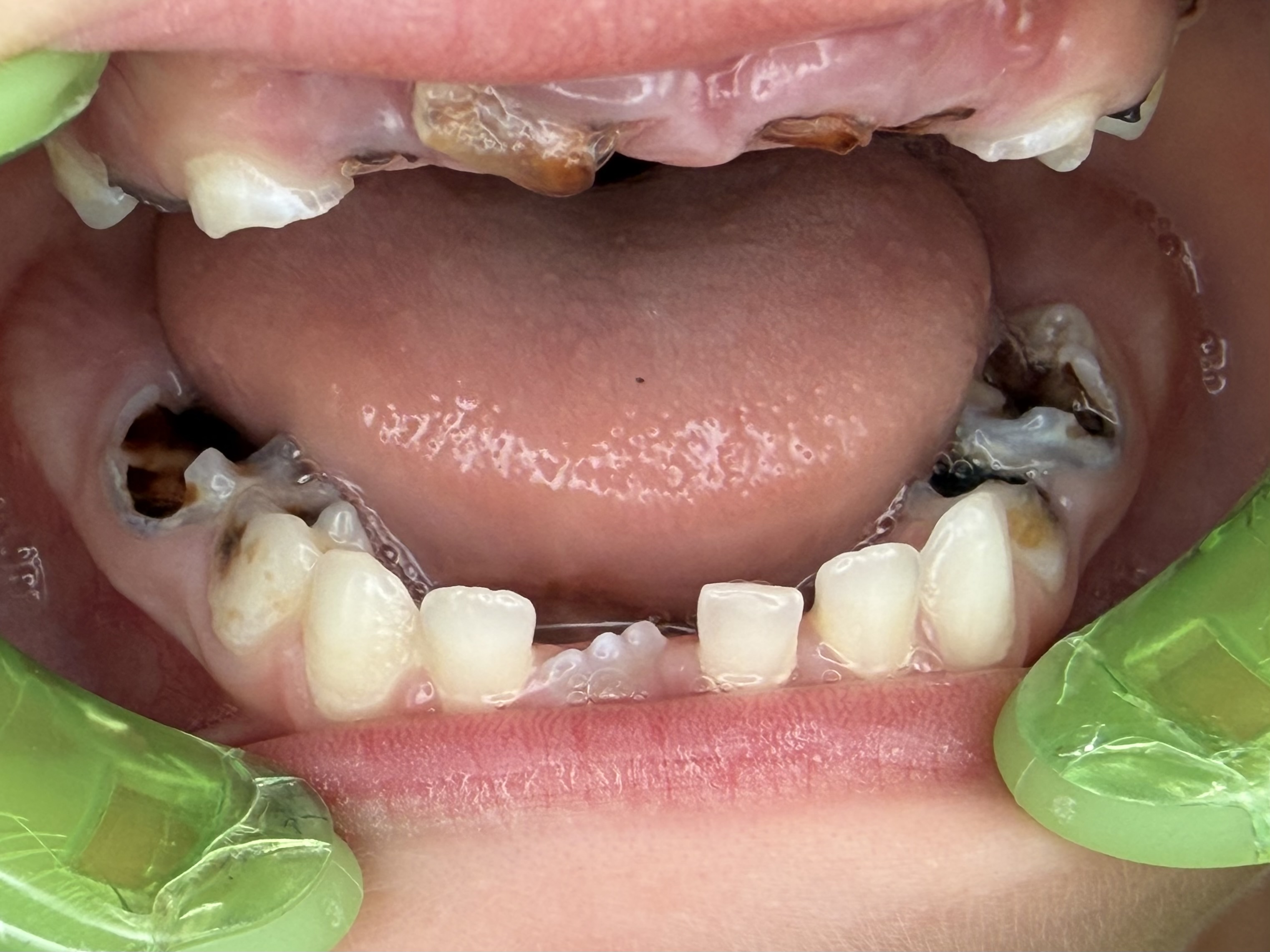
A seven-year-old boy, visiting a dental practice for the very first time. His oral hygiene was severely neglected and most of his primary teeth were decayed — a picture that typically develops over a long time, with plenty of sugary drinks and without regular brushing. Sugary sodas, syrups and fruit juices expose the teeth to acid attacks several times a day: the enamel first discolours, then cavities form — and in primary teeth, with their thinner enamel, this happens faster than in permanent teeth.

This is why prevention matters so much: water instead of sugary drinks, brushing twice a day supervised (and finished, if needed) by a parent, and regular dental check-ups from the first year of life. A condition like this is never the child's fault — but turning it around takes teamwork.
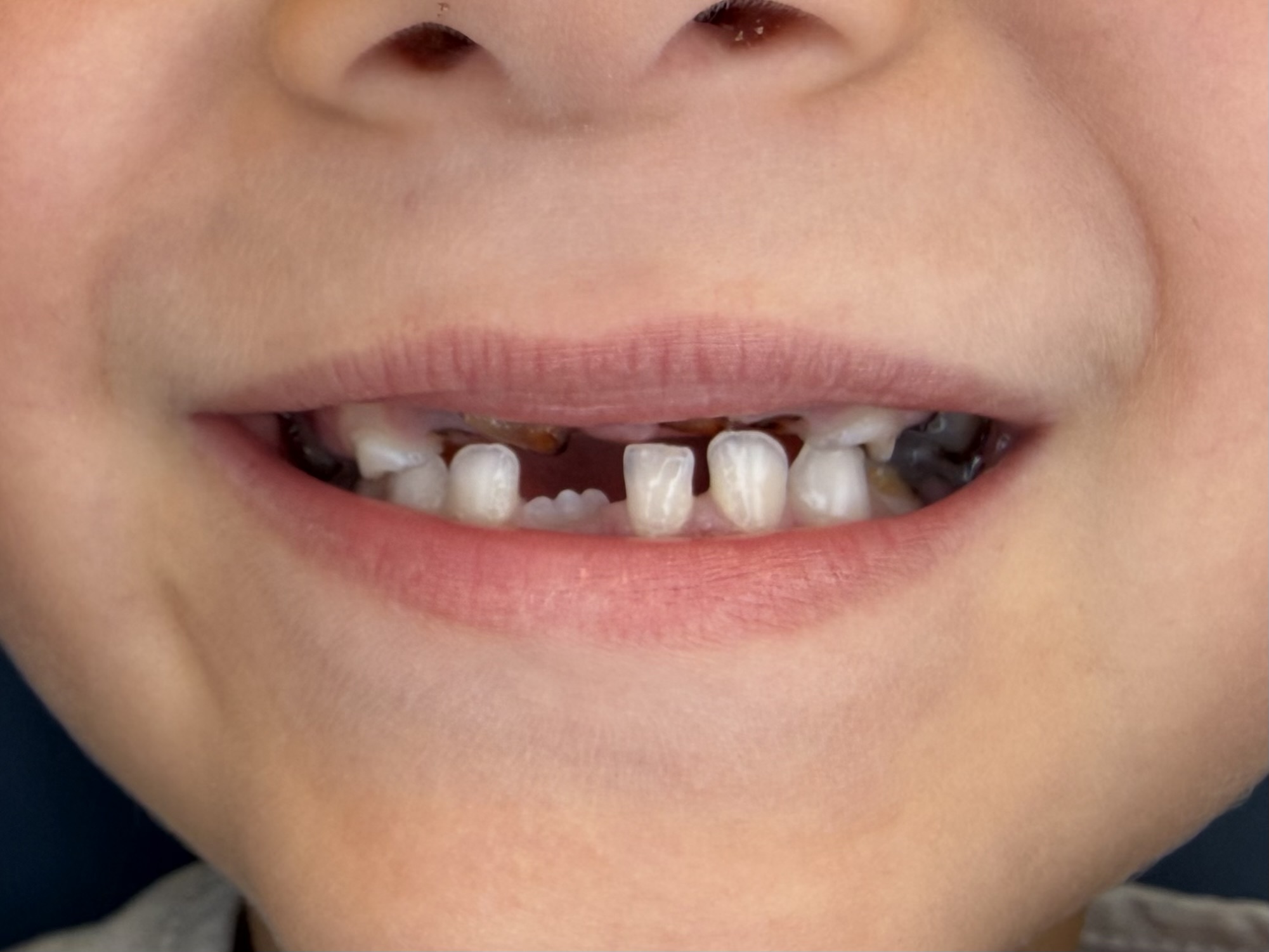
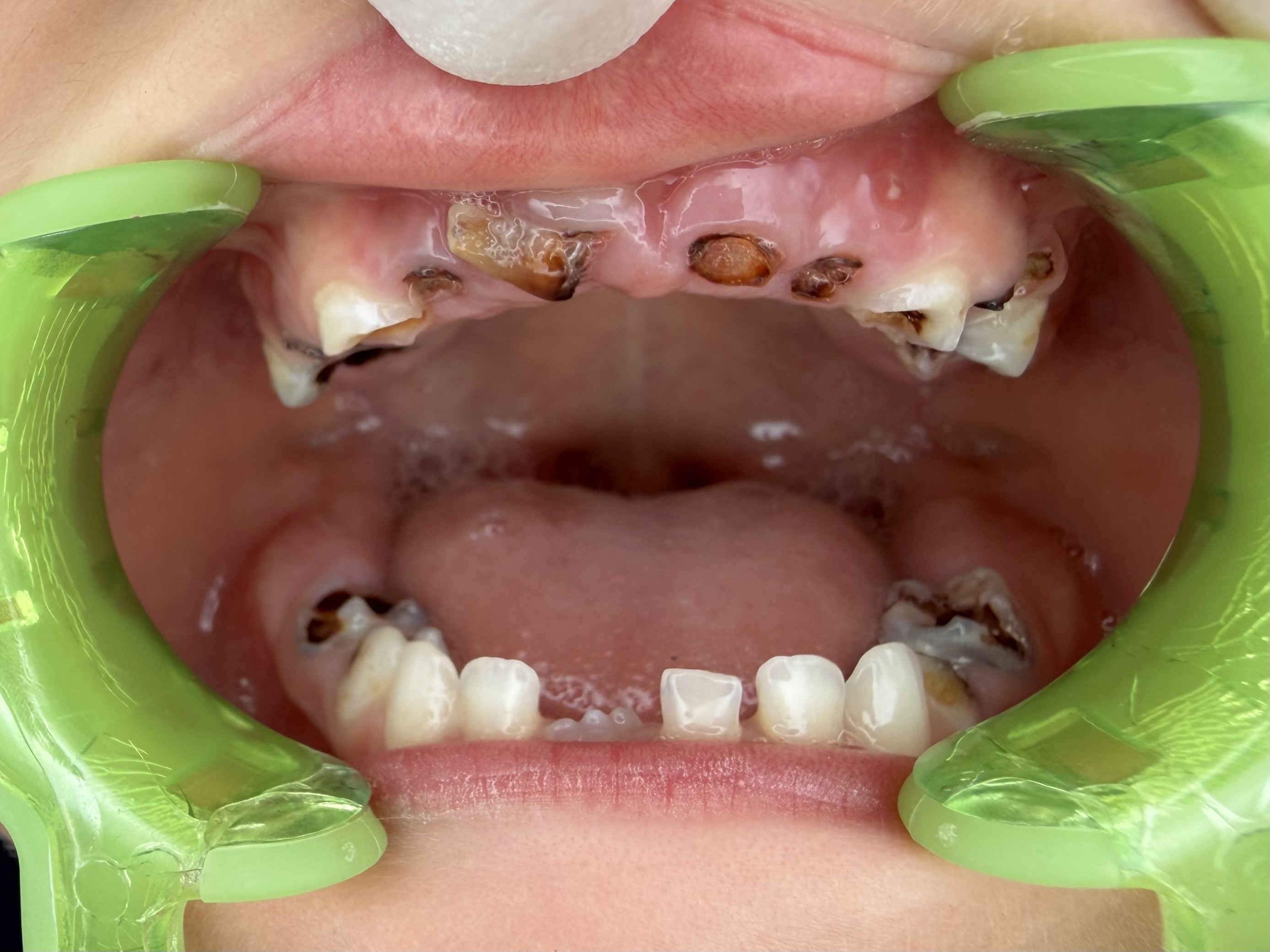
Intraoral view
Intraoral view
Upper teeth
Upper teeth
Lower teeth
Lower teeth

What can be done?

With decay this extensive, restoring the teeth with fillings is no longer possible. The goal is to keep the child pain-free and to reach the best possible oral hygiene, so that the permanent teeth never end up in a similar state. If pain develops, opening ("drilling") or extracting the affected tooth are the options.
02 What does gum inflammation look like?

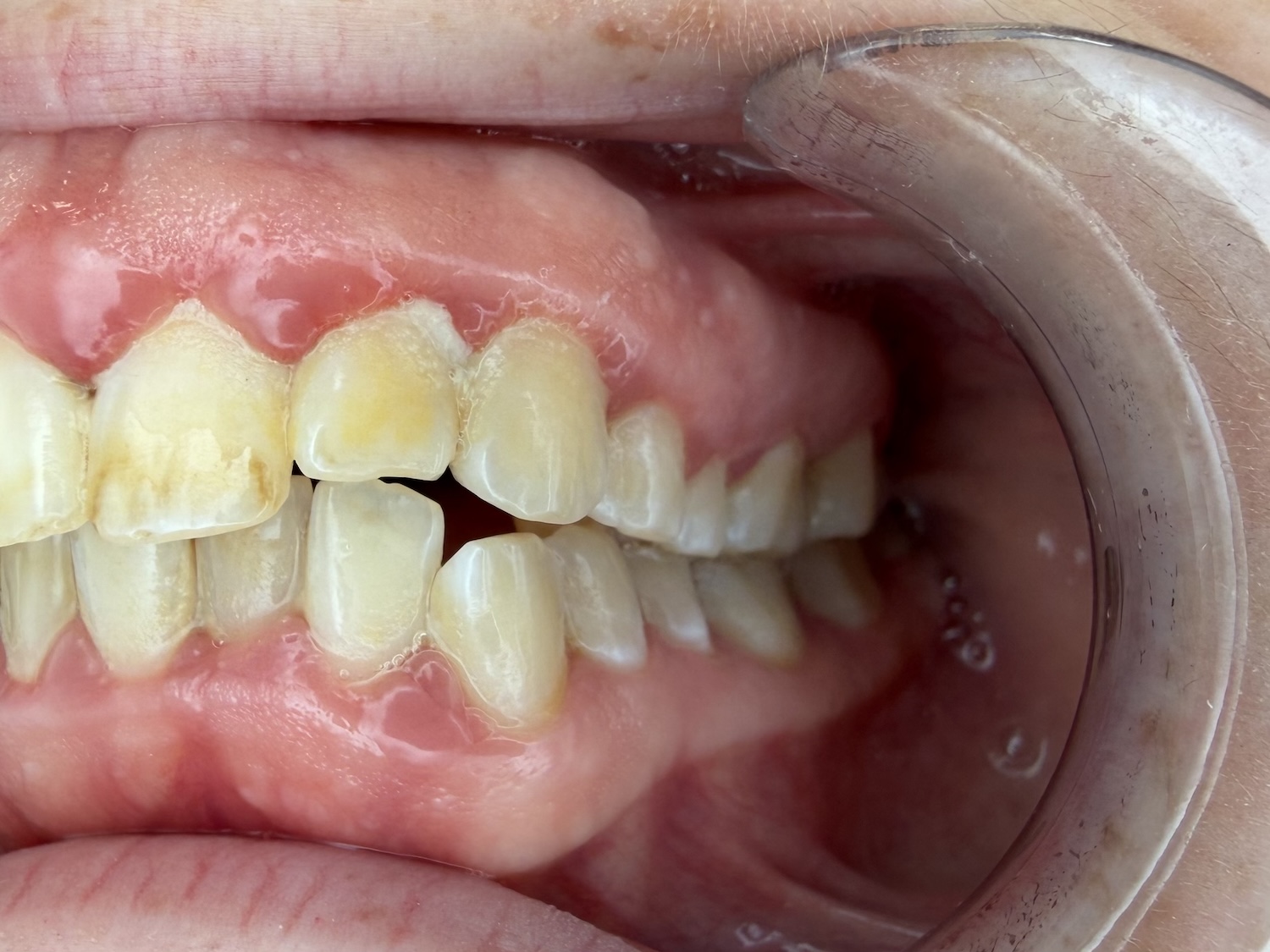
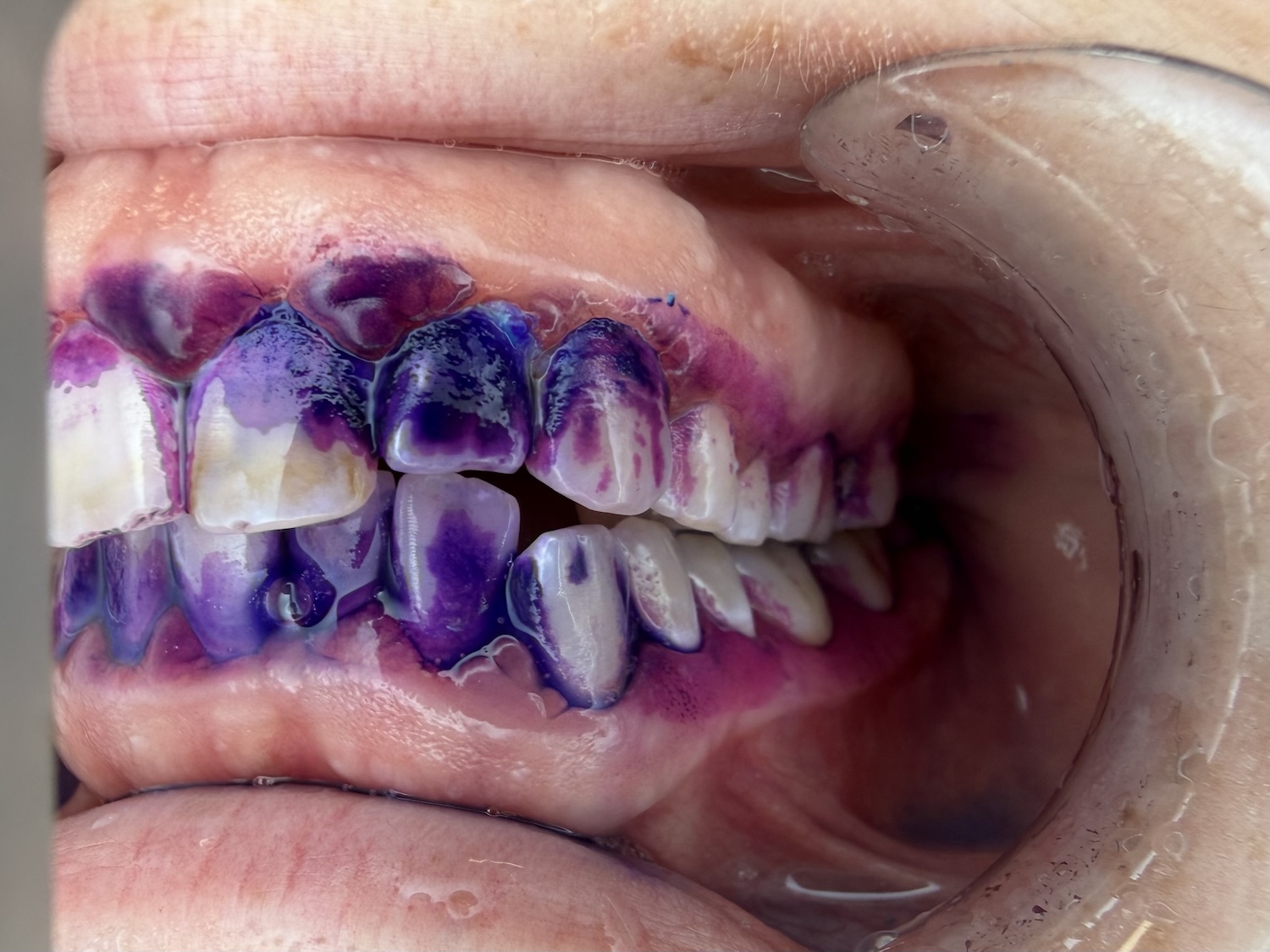
Our fourteen-year-old patient arrived with neglected oral hygiene: the gums were swollen and bled easily in several places — the typical picture of gingivitis. The cause is almost always the same: bacterial plaque (biofilm) sitting along the gumline and between the teeth, not removed regularly and thoroughly by brushing.

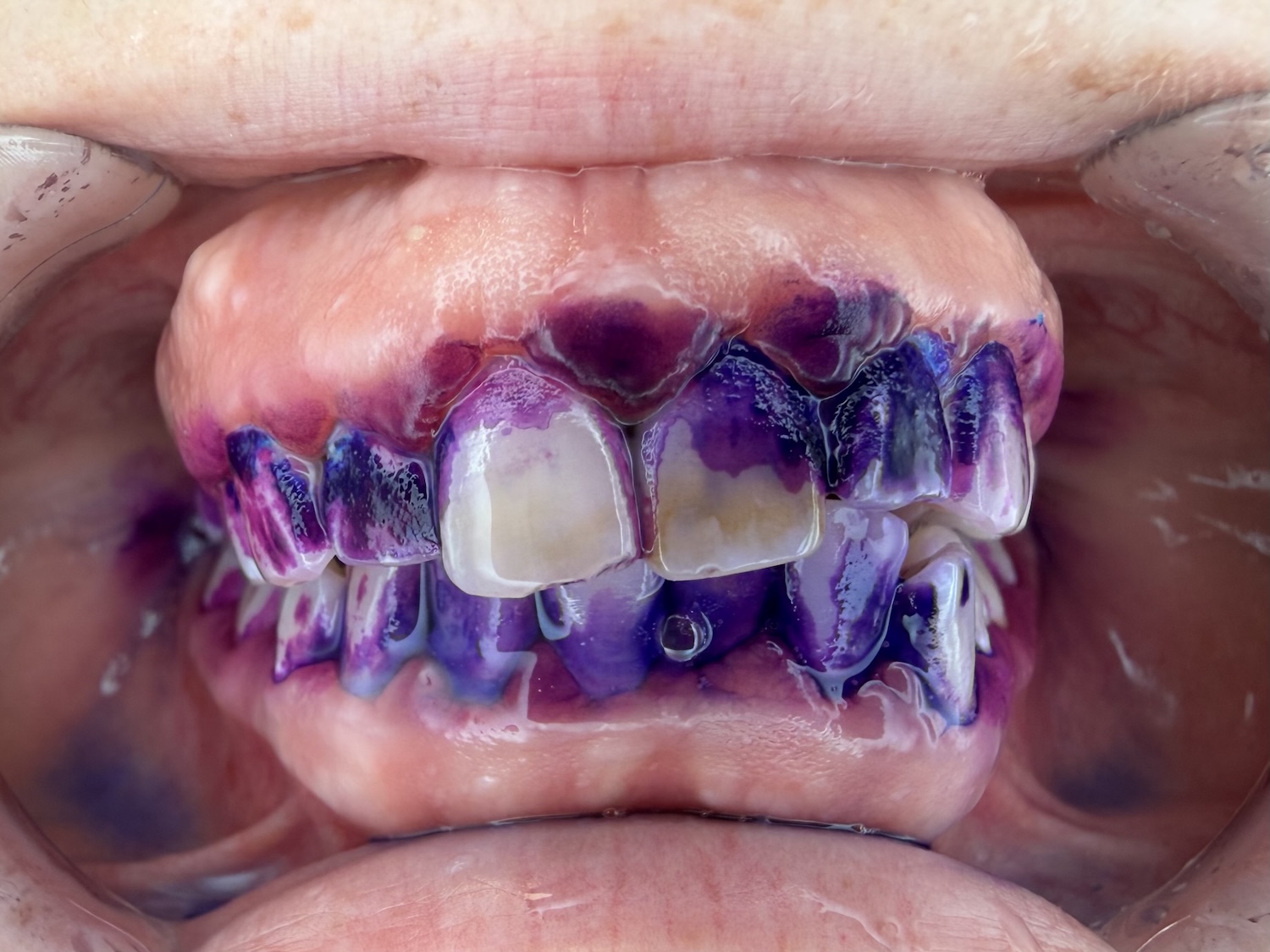
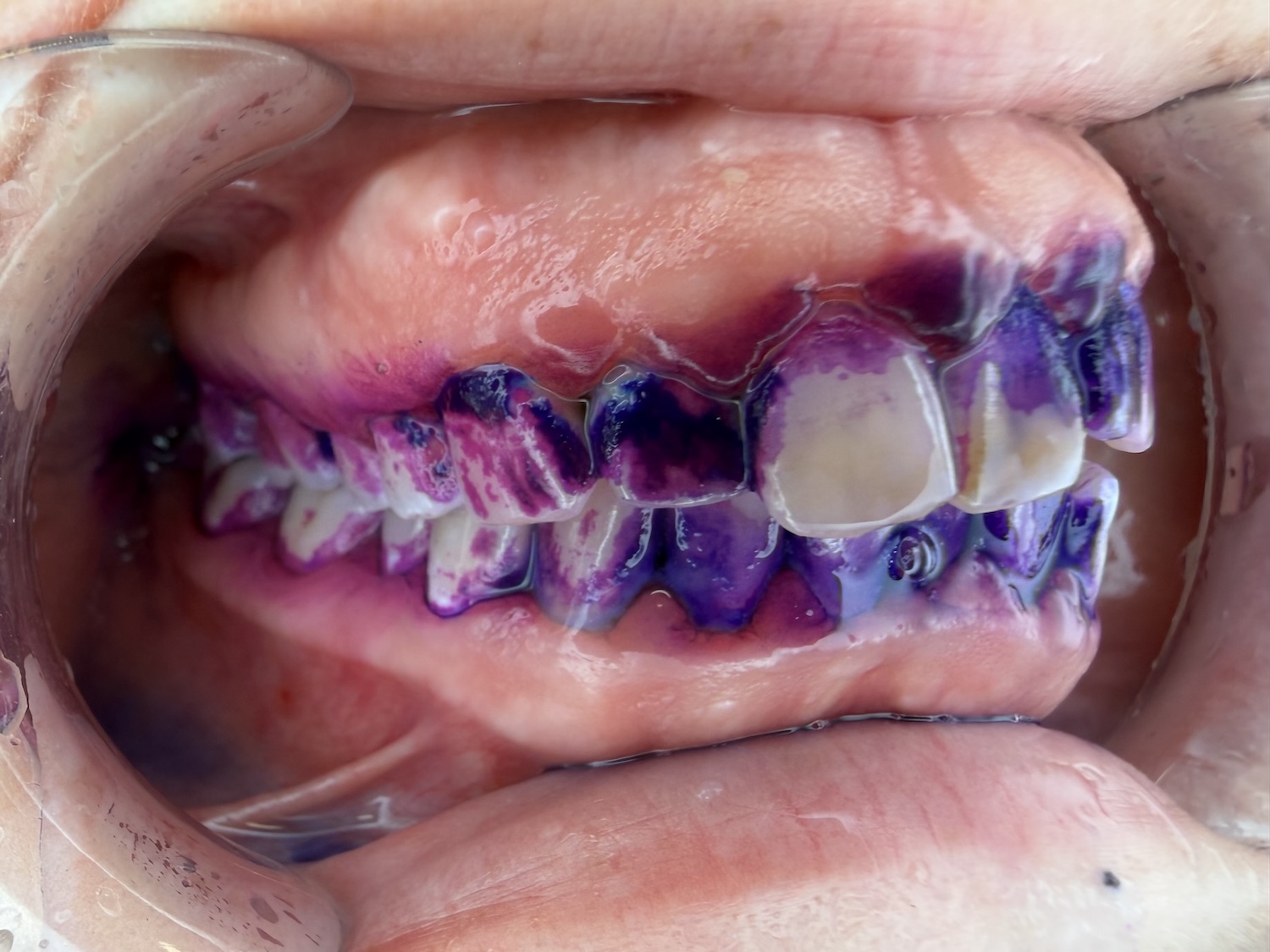
Treatment was done with our EMS device, following the Guided Biofilm Therapy protocol. As its first step we disclosed the plaque with a dye — in the photos, the vivid coloured layer shows exactly where biofilm remained on the teeth. Disclosing helps the patient as much as us: they see with their own eyes where the toothbrush doesn't reach. The AIRFLOW jet of warm water and fine powder then removed the biofilm gently, without scraping.

Before treatment — front
Before treatment — right side
Before treatment — left side
Plaque disclosed — front
Plaque disclosed — right side
Plaque disclosed — left side

What can be done?

The good news within the bad: gingivitis is fully reversible and avoidable with proper care. Regular dental check-ups, a good brushing technique and cleaning between the teeth prevent it — helped by the individually coached, iTOP-style technique training that Anett and Alíz provide at our practice.

03 What does an enamel development disorder look like?

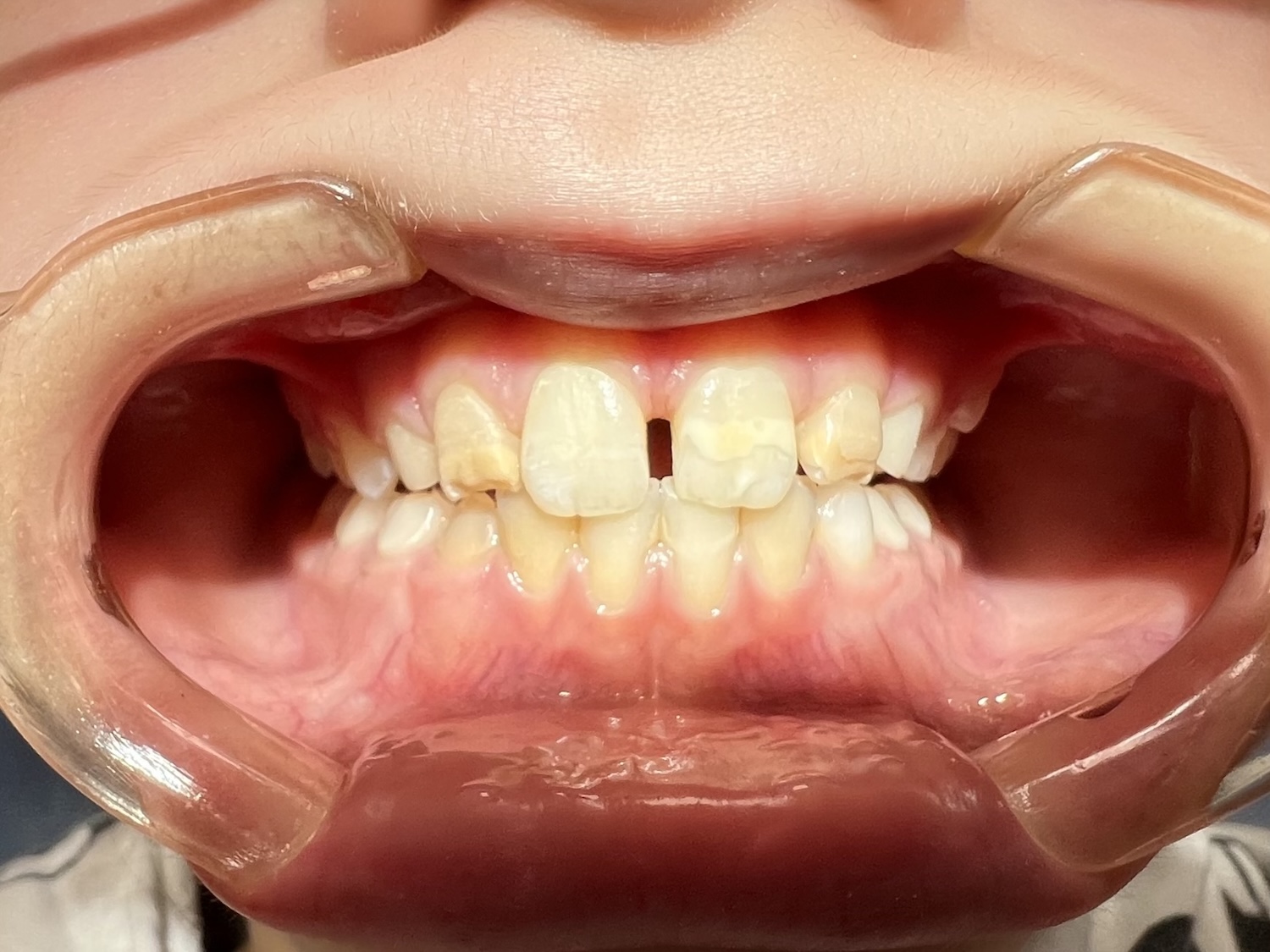
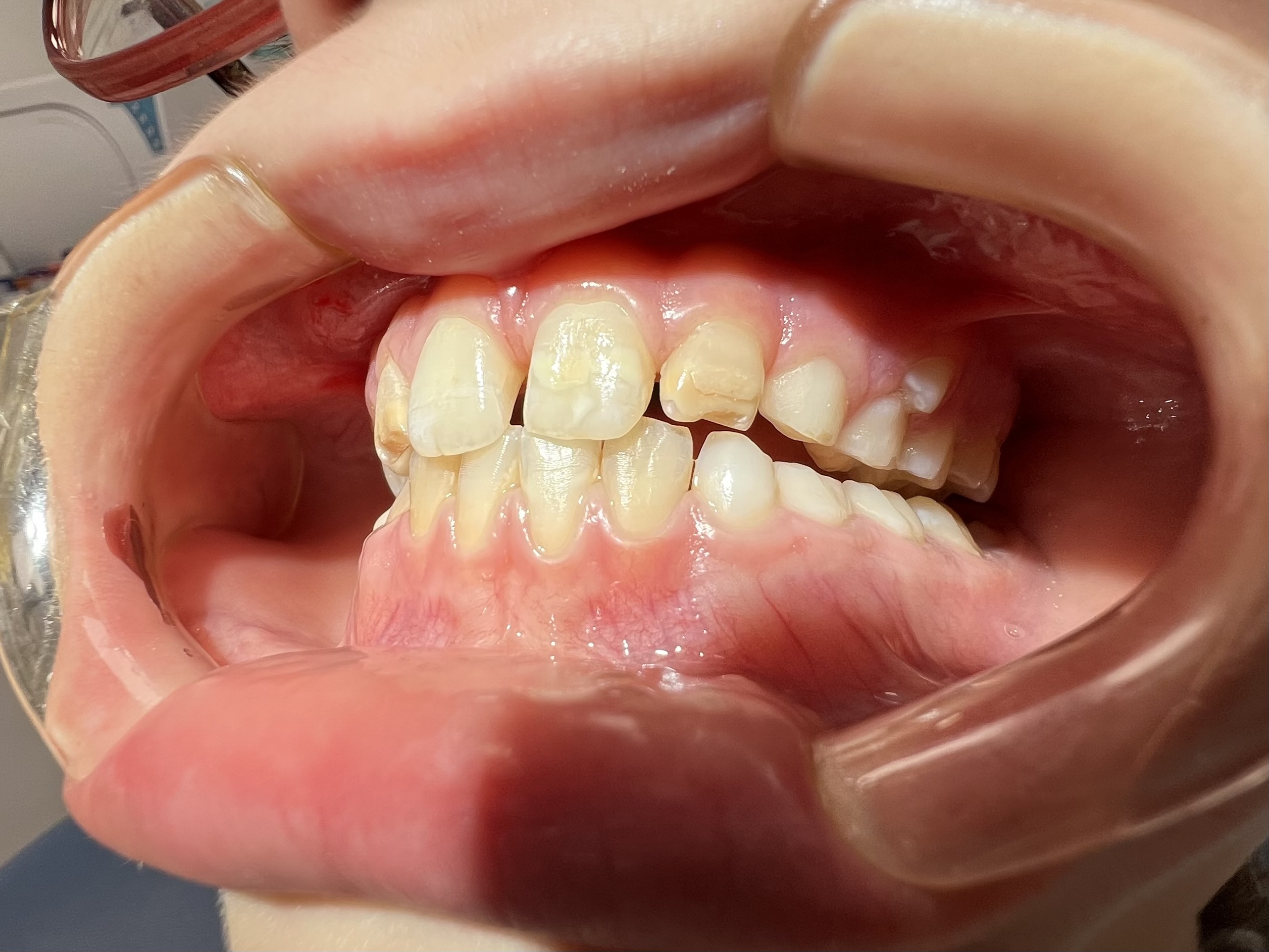
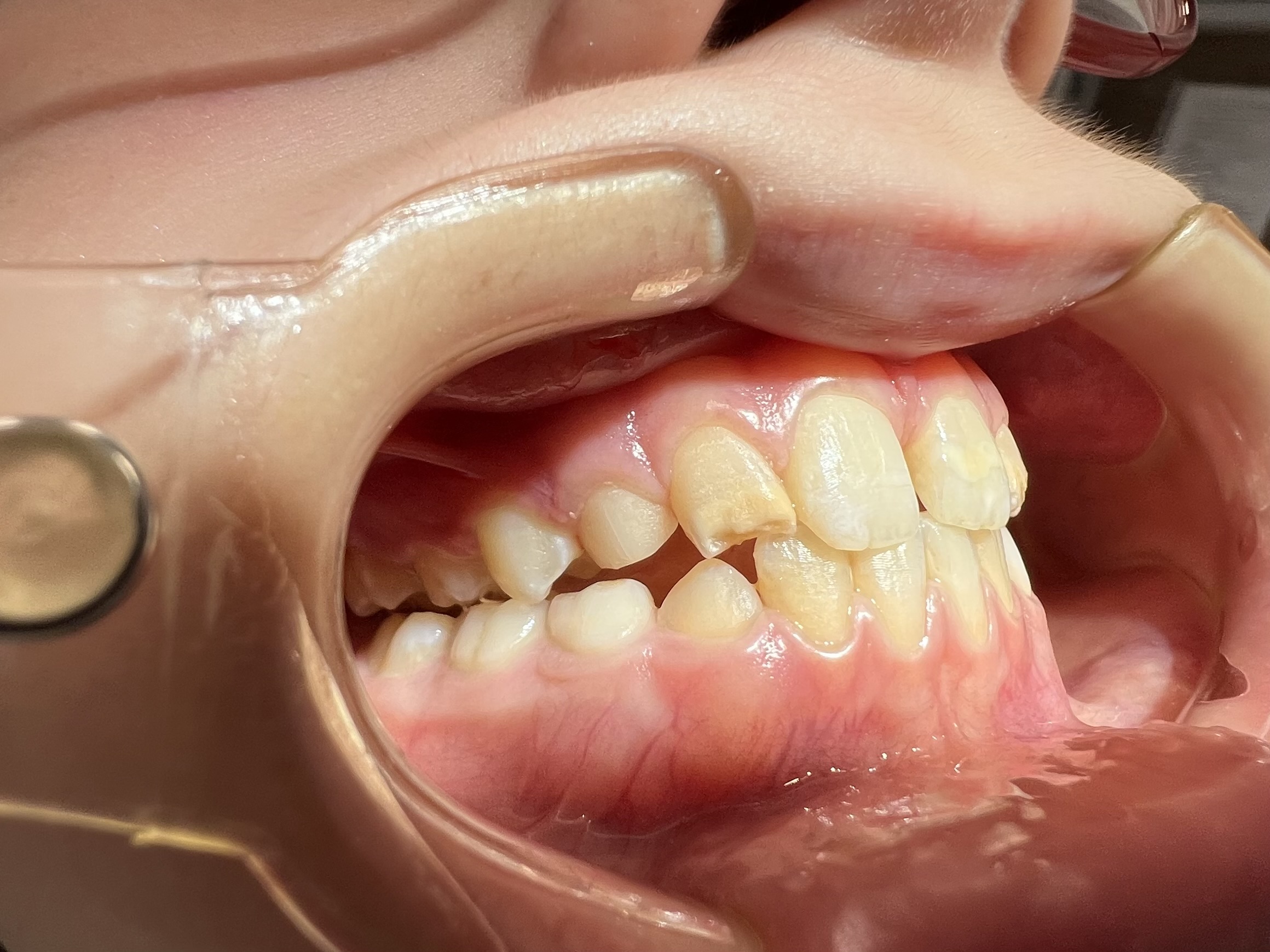
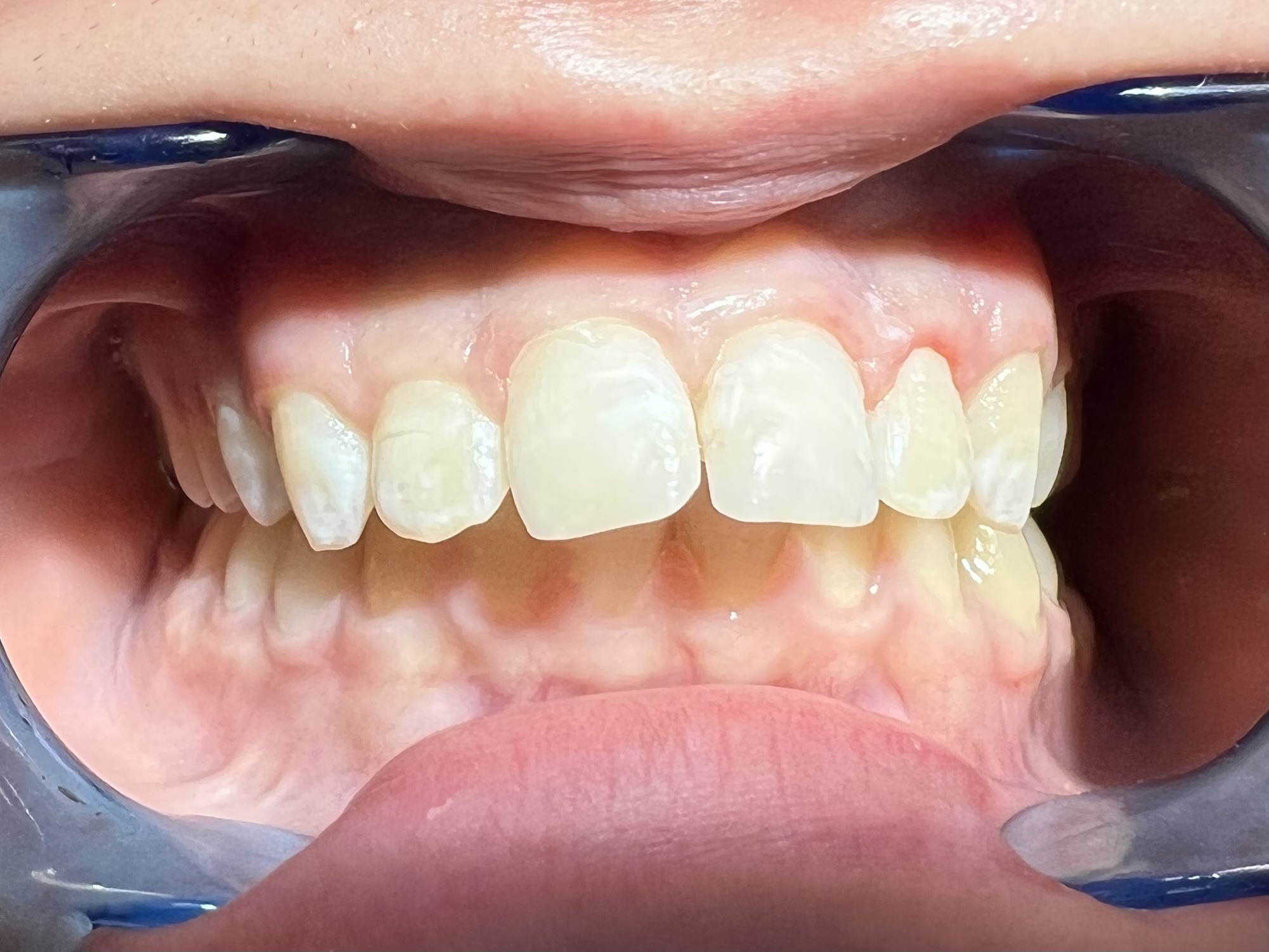
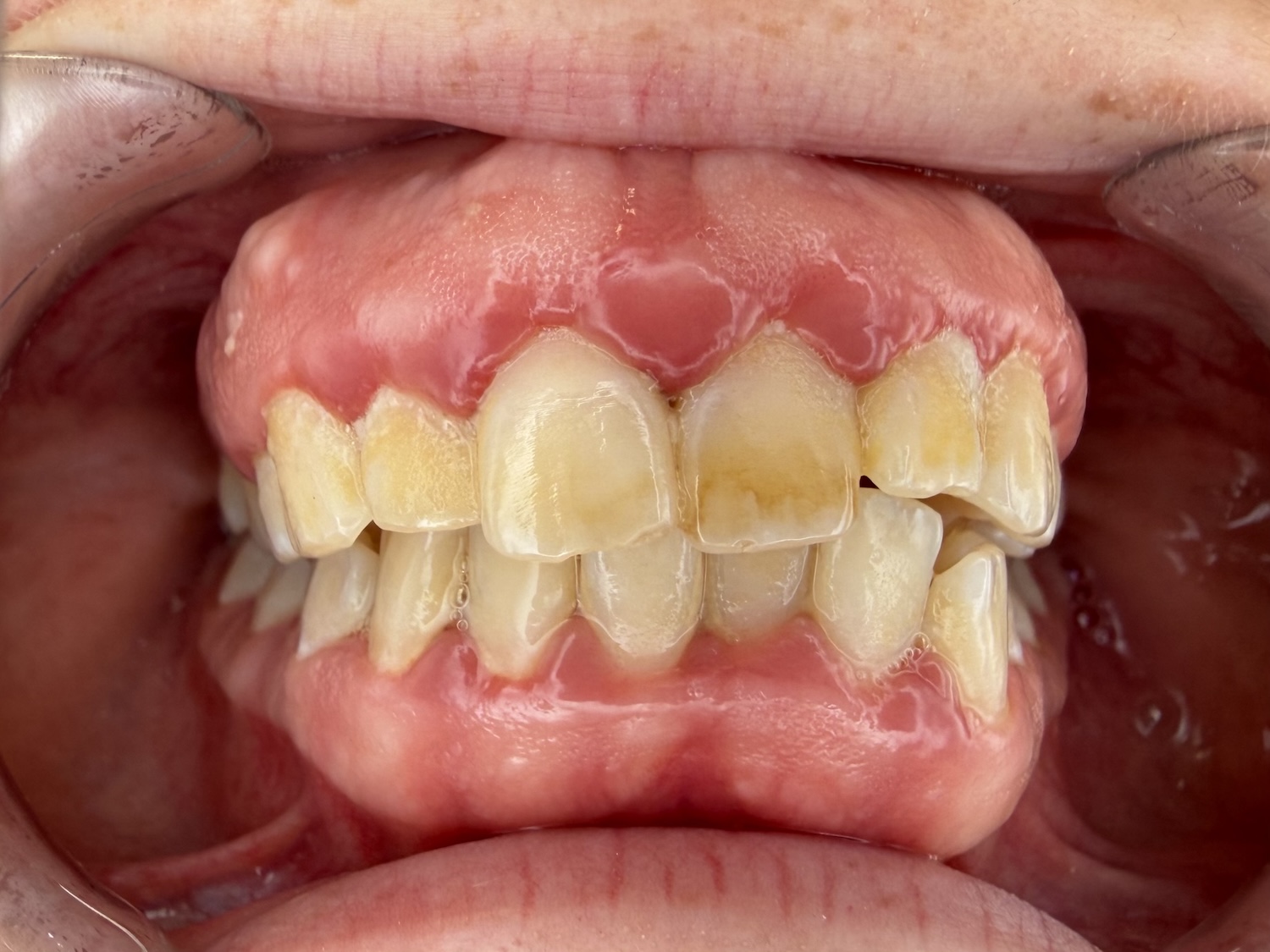
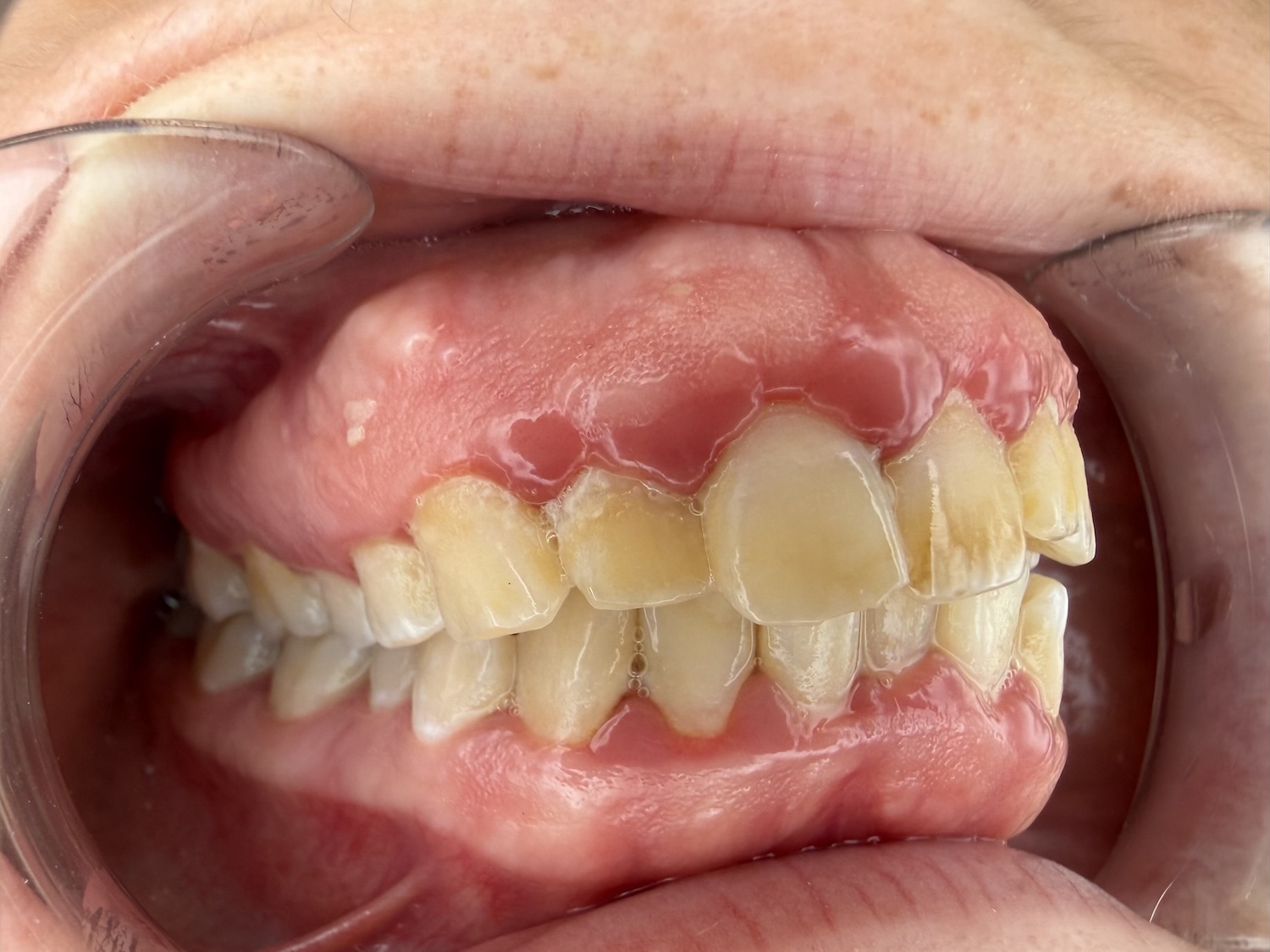
The chalky-white to yellowish-brown patches on our twelve-year-old patient's teeth show a developmental disorder of the enamel. Enamel forms while the tooth is still developing, before eruption — if enamel formation is disturbed in this sensitive period, it leaves a permanent mark on the finished tooth. The most common pictures are hypomineralisation (the enamel's mineral content is reduced, making it softer and more porous) and hypoplasia (the enamel is thinner, with a pitted surface).

There is rarely a single identifiable cause: febrile illnesses in pregnancy and early childhood, episodes of oxygen deprivation, premature birth, certain medicines and genetic factors can all play a part. Importantly: this is not a brushing failure. Affected teeth, however, can be more sensitive to hot and cold, wear faster, and the porous enamel decays more easily — so these teeth need closer follow-up.

Front view
Front view
From the left
From the left
From the right
From the right

What can be done?

Treatment depends on severity. In milder cases, regular fluoride remineralisation, desensitising care and close monitoring are enough. Areas that are aesthetically or functionally disturbing, or beginning to decay, are covered with an aesthetic filling — protecting the tooth and hiding the patch. In extensive, severe involvement a veneer or crown may come into question later; the key is early recognition, because with protection started in time the tooth can be kept long-term.

04 What happens when front teeth chip?

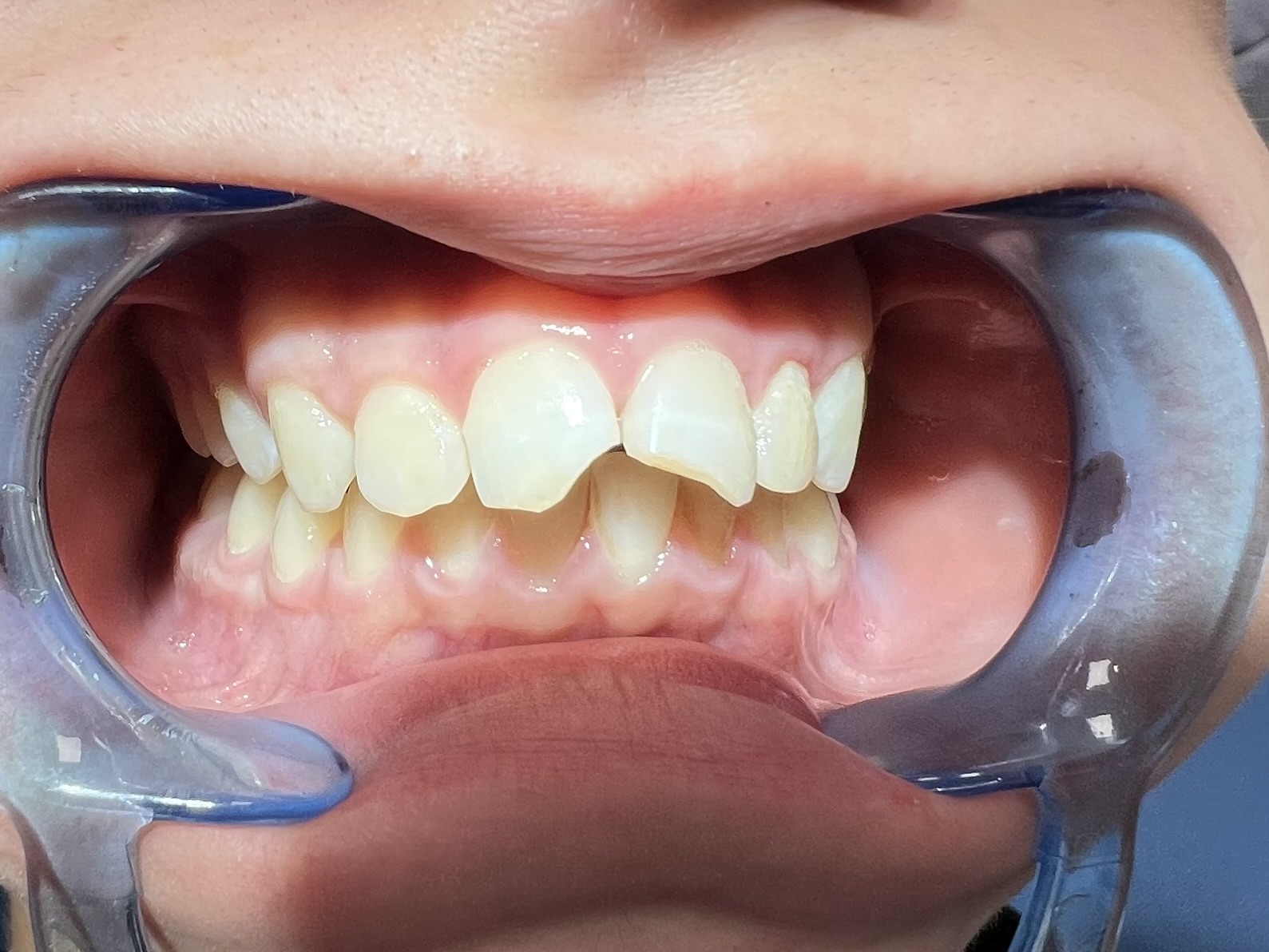
Our thirteen-year-old patient chipped both central incisors in an accident (the mesial — middle — corners of teeth 11 and 21). Front-tooth fracture is one of the most common dental injuries of childhood — a bike, a scooter, sports or a simple fall is enough. The quickest next step is a dental examination: the depth of the fracture decides whether the pulp is involved, and with it the treatment.

In this case the pulp was unharmed, so we restored the broken corners with aesthetic, tooth-coloured fillings. As the photos also show, the restoration does not aim to "straighten" the teeth or change their alignment — that is an orthodontic task. The filling gives the tooth back its original shape, in the gentlest possible way.

Before treatment — the chipped front teeth
After treatment — with aesthetic fillings

What can be done?

With a fresh fracture, see a dentist as soon as possible — if you have the broken fragment, keep it in milk or saline and bring it along. A superficial fracture is restored with an aesthetic filling; a deeper injury involving the pulp needs root canal treatment and a build-up. Correcting the position of the teeth — if needed — is done with braces, at a separate orthodontic clinic.